
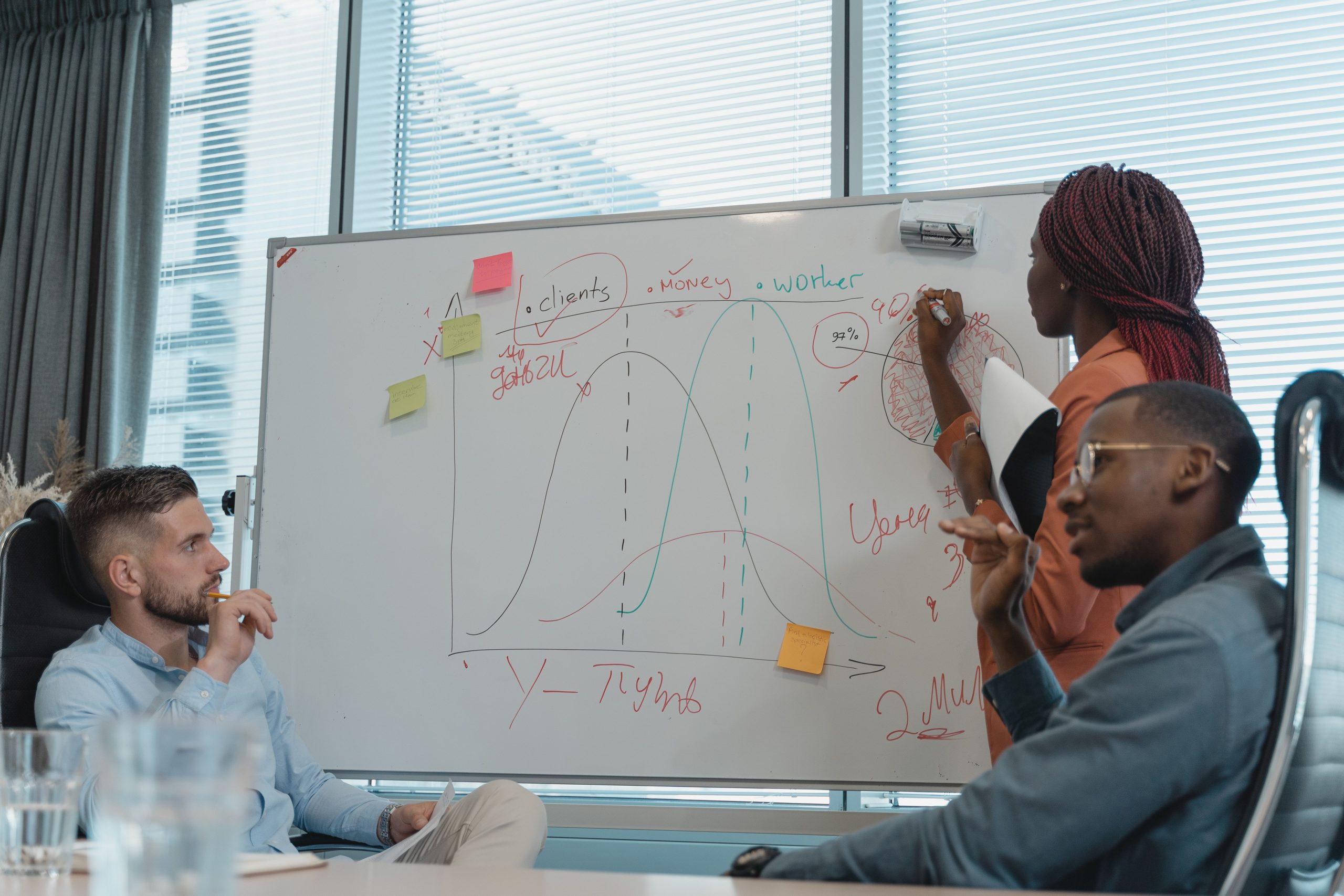
Economic growth is often described as a straight line: investment raises productivity, productivity raises incomes, and higher incomes create room for further investment. In practice, the path is less tidy. Technology changes, weather disrupts production, demographics alter labour supply, and shifts in trade or finance can expose weaknesses that were invisible during stable periods.
That is why economic adaptability is a condition for sustainable growth, not a substitute for it. An adaptable economy can change direction while preserving its productive base. It can move workers towards emerging sectors, update infrastructure, adjust public policy, and support viable businesses without treating every short-term shock as a reason to abandon long-term priorities.
Adaptability means changing without losing direction
Adaptability is sometimes confused with flexibility in the narrow sense: cutting costs quickly, changing targets frequently, or responding to every movement in markets. Those reactions may be useful in a crisis, but they do not necessarily create durable prosperity. A country or company that repeatedly postpones skills development, maintenance, research, or infrastructure spending may look responsive while becoming less capable over time.
A stronger definition has three parts:
- Absorption: the ability to withstand a shock without widespread, lasting damage.
- Reallocation: the ability to move capital, labour, and knowledge towards more productive uses.
- Renewal: the ability to develop new capabilities before existing sources of growth weaken.
The distinction matters because a temporary recovery is not the same as sustainable growth. The OECD’s 2024 research on European regions found that areas with higher pre-recession productivity generally lost a smaller share of jobs during downturns and were more likely to recover their previous employment levels. Productivity is therefore not only a measure of efficiency; it can also act as a buffer when conditions deteriorate. The OECD study on productivity and labour-market resilience provides useful detail on that relationship.
Why a single growth engine is rarely enough
Dependence on one industry, export, commodity, technology, or source of external finance can produce impressive results while conditions are favourable. It can also make the wider economy unusually sensitive to a single price movement or disruption.
Diversification does not mean supporting every possible activity. It means building enough variety and capability that a weakness in one area does not eliminate the prospects of the whole system. The IMF’s 2024 work on economic diversification describes this as a route to greater resilience, higher productivity, and improved living standards, while stressing that successful strategies must fit each economy’s institutions, skills, infrastructure, and existing production structure.
This is also where policy consistency matters. A useful economic analysis of policy adaptability illustrates why plans need mechanisms for review and adjustment as circumstances change. The general lesson applies across economies: a long-term strategy should set direction, but it should not make learning impossible.
Four foundations of an adaptable economy
1. Skills that can travel between sectors
Workers cannot move into more productive activities if education and training remain tied to yesterday’s occupational structure. The transition does not require every person to become a specialist in advanced technology. It does require accessible opportunities to acquire transferable skills, from digital literacy and technical competence to problem-solving, management, and communication.
The OECD reported in its December 2024 Economic Outlook that labour and skills shortages remained significant in sectors including healthcare and information and communications technology. It identified upskilling, reskilling, education reform, and lifelong learning as important responses. These investments take time, which is precisely why they should not begin only after a shortage becomes visible.
2. Productive investment with room for adjustment
Adaptability needs physical foundations: reliable energy, transport, water, communications, housing, and digital infrastructure. It also needs less visible assets such as research capacity, data systems, sound institutions, and effective public administration.
The challenge is to avoid both extremes. Underinvestment leaves an economy exposed. Poorly targeted investment can lock resources into projects that no longer fit changing needs. Good planning therefore includes measurable objectives, transparent evaluation, maintenance budgets, and the ability to revise projects when evidence changes.

3. Fiscal and financial resilience
Public finances influence how much room governments have to respond to a downturn, a disaster, or an urgent investment need. Excessive debt service can crowd out productive spending, while unstable rules can discourage private investment. The answer is not simply to minimise public spending. It is to protect high-value investment while maintaining credible medium-term fiscal frameworks.
The IMF’s 2024 G20 report makes a similar distinction: fiscal consolidation may be needed in many economies, but it should be carefully calibrated and safeguard growth-enhancing measures such as public investment. Sustainable growth depends on both financial discipline and the capacity to invest through change.
4. Climate and resource awareness
Climate adaptation is an economic issue because floods, heat, drought, and changing environmental conditions can damage capital, interrupt supply chains, lower productivity, and increase public expenditure. Resilience measures are not only defensive projects. They can preserve connectivity, protect human capital, and make new investment more viable.
A 2024 IMF country study using macroeconomic simulations found that adaptation infrastructure could reduce the growth impact of a natural-disaster shock by about one-third in the scenario examined. The result is model-based and country-specific, not a universal return estimate. Its broader implication is more general: resilience investment should be assessed as part of growth policy, not treated as an unrelated environmental cost.
The difficult balance: efficiency today or resilience tomorrow?
Adaptability often involves a real trade-off. Redundancy can appear inefficient in the short term. Maintaining alternative suppliers, spare capacity, stronger building standards, or larger inventories may cost more than running a system at its narrowest possible margin.
Yet a system designed only for average conditions can be expensive when conditions stop being average. The sensible question is not whether resilience has a cost. It is whether the cost of resilience is proportionate to the consequences of failure and whether the investment creates other benefits, such as cleaner energy, better public health, or improved access to markets.
There is a second trade-off between speed and inclusion. Rapid structural change can raise aggregate productivity while leaving some workers and regions behind. Social protection, portable benefits, retraining, and regional investment can make reallocation more durable by reducing the personal risk of transition. Inclusion is therefore not merely a distributional add-on; it can increase the political and practical feasibility of economic change.
What adaptability looks like in practice
Whether the unit is a national economy, a city, or a business, an adaptability test can be built around five questions:
- What is the system most dependent on? Identify concentrated exposure in markets, suppliers, energy, skills, finance, or natural resources.
- How quickly can resources move? Examine barriers to labour mobility, business entry, investment, technology adoption, and trade.
- What capabilities are being built now? Track skills, infrastructure, research, management quality, and digital access rather than relying only on current output.
- What happens under stress? Test plans against higher energy costs, weaker demand, supply interruptions, extreme weather, or tighter financing.
- Can decision-makers learn? Set review points, publish relevant data, and allow policies to improve when results differ from expectations.
The last question is easy to overlook. Adaptability is not just the number of policy options available; it is the quality of the feedback between decisions and evidence. Without that feedback, flexibility becomes improvisation.
A durable growth strategy is designed to evolve
The case for economic adaptability is ultimately a case against false choices. Sustainable growth does not require choosing between resilience and productivity, or between environmental responsibility and development. It requires investment decisions that recognise how those objectives interact.
Economies that can diversify production, help people gain new skills, maintain fiscal credibility, and protect essential infrastructure are better placed to turn disruption into adjustment rather than permanent loss. Their advantage is not that they avoid change. It is that change does not erase their capacity to grow.
The most durable growth strategies therefore come with a built-in permission to learn. They define the outcomes that matter, measure progress honestly, and change the route when conditions or evidence demand it. That is economic adaptability in its most useful form: not constant motion, but the ability to keep moving towards prosperity without mistaking yesterday’s plan for tomorrow’s reality.