

Litigation finance reform has become an important issue as class actions and group claims continue to grow in size and complexity. Many claimants rely on external funding because major legal cases can be too expensive to pursue without financial backing. This model can improve access to justice, but it also raises questions about transparency, costs, and control.
As lawmakers, courts, and legal professionals review the current system, claimants may see changes in how funded cases are explained, managed, and approved. The goal of reform is usually to protect claimants while keeping funding available for cases that would otherwise be impossible to bring.
Why Litigation Finance Reform Is Being Discussed

The debate has intensified as concerns grow around funding agreements, legal fees, funder profits, and financial risk. When reports emerge that a Firm sued over debts connected to major litigation work, it can increase public attention on how legal funding is structured and whether stronger oversight is needed.
Litigation funders often provide money for legal teams, expert evidence, court costs, and case management expenses. In return, they may receive a percentage of any settlement or award if the claim succeeds.
For claimants, the concern is whether these arrangements are fair and clearly explained. Reform could require more transparency about who funds a case, how much they may receive, and what deductions could be made from compensation.
What Could Change For Claimants

Future reforms may introduce clearer disclosure rules so claimants better understand the financial side of their case. This could include more detailed information about funding terms, legal costs, success fees, and the order in which money is distributed after a settlement.
Claimants may also benefit from stronger protections against unfair agreements. Courts or regulators could have greater power to review funding arrangements and ensure that the final outcome remains reasonable for the people bringing the claim.
However, stricter rules may also create challenges. If regulation becomes too restrictive, some funders may be less willing to support high-risk cases. This could reduce access to justice for claimants who cannot afford expensive litigation on their own.
Balancing Protection And Access To Justice
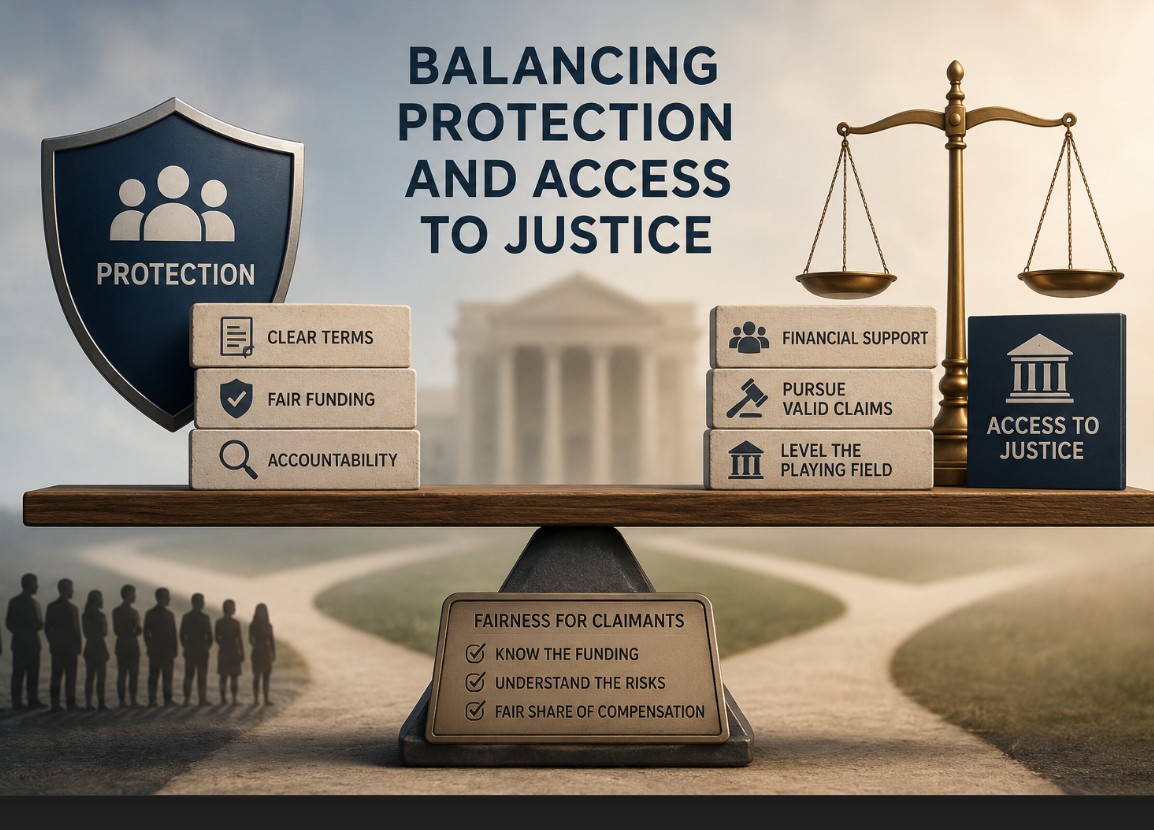
The main challenge for reform is finding the right balance. Claimants need protection from unclear costs and unfair funding terms, but they also need access to financial support that makes large legal claims possible.
Well-designed reform could improve trust in the system by making funding agreements easier to understand and more accountable. It could also encourage better governance among law firms and funders involved in major group actions.
For claimants, the most important outcome is fairness. They should know how their case is funded, what risks exist, and how any compensation may be divided before committing to a claim.
Conclusion
Litigation finance reform could reshape how claimants participate in funded legal cases. Clearer disclosure, stronger oversight, and fairer funding terms may improve confidence in the system while protecting access to justice. The challenge will be ensuring that new rules do not make funding harder to obtain for valid claims. For claimants, the future of reform should mean greater transparency, better protection, and a clearer understanding of how legal funding affects their case.